Monday, October 16, 2006

छोड़ आये हम वो गलियां...

Bhopal was so hot in September. A lot of heartache was prevented because it was impossible to step out as all of us were in the grip of flu. I had a reason to not do what I wanted to. I did not meet anyone I wanted to. There is peace in this state. To imagine them to be warm and eager, to dream that memories of me would be as fresh in their mind’s eye and as precious (Blog entry:Beeti hui batiyan koi dohraye, bhoole hue naamon se koi to bulaye…)

E-
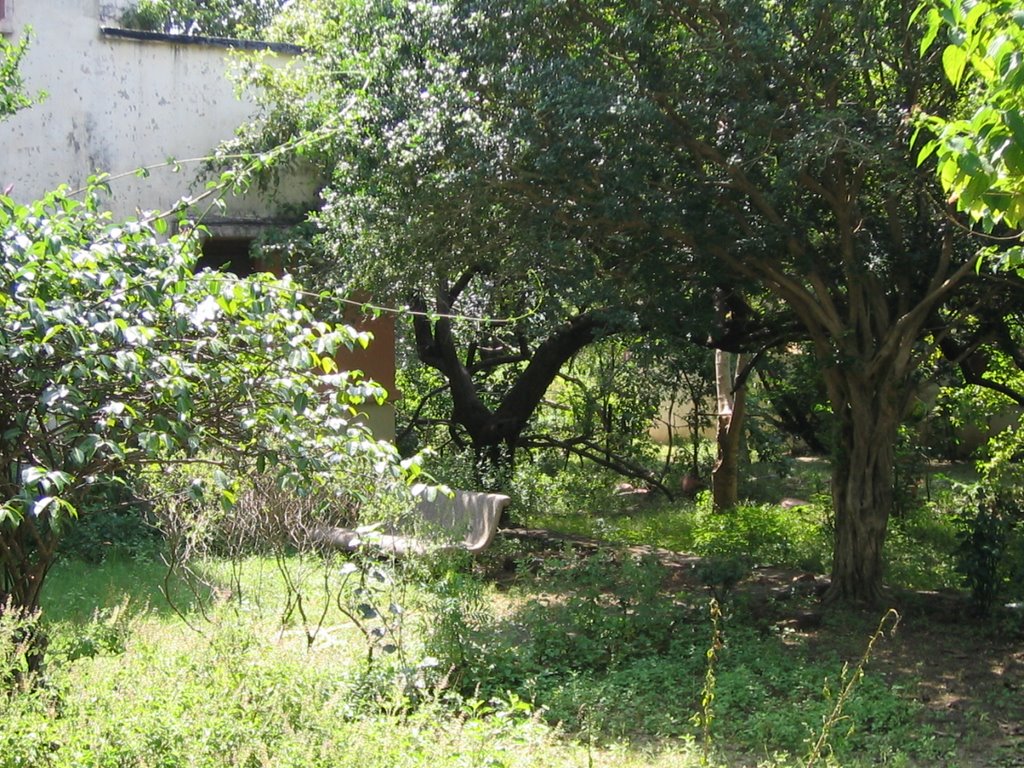
2, Shyamala Hills, our home for as long back as I can remember and which we left in the summer of ‘84 lies derelict. The moment we approached the rickety gate, I noticed a long snake stretched from one end to the other. At a tap, it swiftly flew into the waist-length grass. The sound of beings that dwell in the thick and humid undergrowth in jungles was all that could be heard. The house looked unoccupied (unlived?).

The garden of course is only undergrowth now. Difficult to imagine the garden we took so much pride in. The manicured lawns daintily edged with multi-colored dahlias, gerberas in winter and with the fragrant mogra in summer. Winter afternoons spent sunning in the lawn munching on guavas from the several trees around and sugarcane that bordered the south edge of the garden. Summer evenings sipping squash in the cane chairs that dug into the just-watered lawns.


The ber-ka-ped (berry tree). An entire childhood spent on the tree.

At a comfortable fork about 6 feet from the ground was my perch. I read Champak to Jane Eyre there. The fact that this seat was also in line with the dinning room window allowed me to get my food and water without having to come down and kept me in touch with the goings on inside the house, so important when you have three elder sisters!

Neither the moss covered walls nor the unkempt garden saddened me as much as the closed windows. Home was where when I returned after an altercation with a friend or a difficult exam, the sight of mummy’s pink lace curtains billowing out of the downstairs windows conveyed instant comfort. Ours was literally an ‘open house’. People walked in and out unannounced all day. Staff and students from college, our friends and neighbors - anyone. No body was not important enough to have a little chat with - the postman Allaudin, the fruit seller whom we called kelewala (banana seller) in winter and amroodwala (guava seller) in summer, the sweeper Balla ki biwi (Balla’s wife) and the bread and eggs seller, Munne mian.

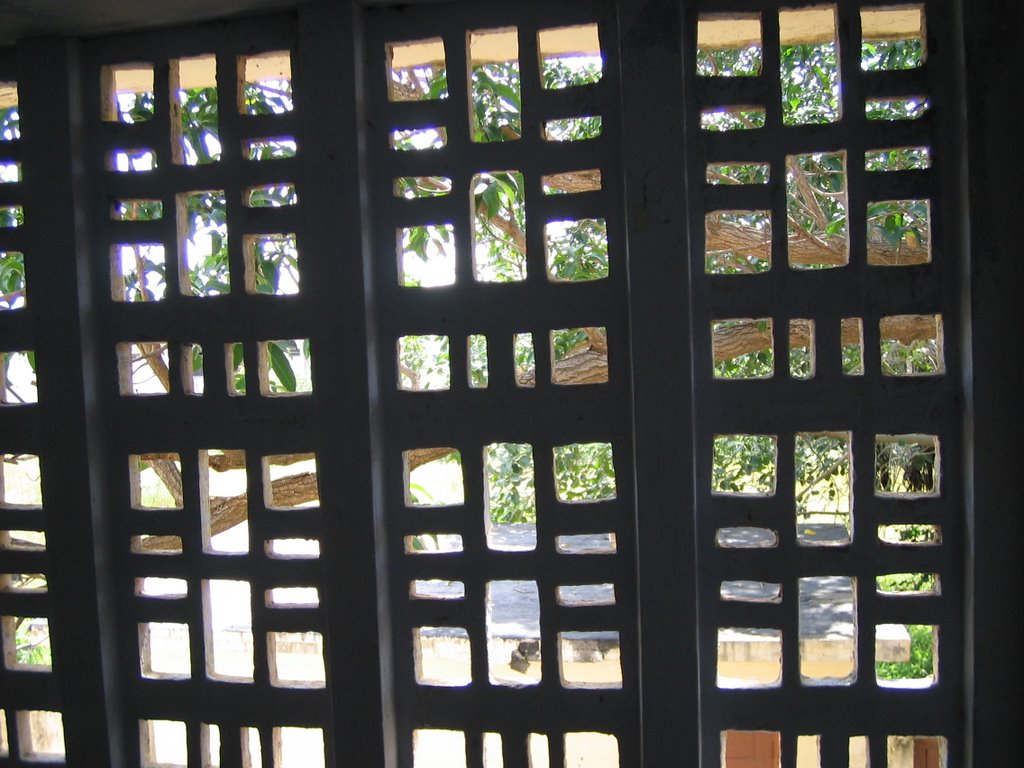
The house was damp and musty inside. When I opened the door to the terrace a big, dark lizard fell on the mossy, cracking floor. From the lattice at the staircase landing, I could see the mango and the fig trees (first blog entry – Bargad Tree) crowding over the backyard. It felt too dangerous to go there.


Now the questions. Would I have been happier to see it in its lost glory? To see some children up the trees, to smell the aroma of dahi-wada and mutter paneer coming from the kitchen, to see some man typing away furiously at the window upstairs? I would have hated it. I would have grudged them these pleasures. I would have wanted it all back from them. They were mine, ours. But now, they were nobody’s. I think I got a sadistic pleasure from it just being fit for pictures to show around.


Monday, September 04, 2006

Lives of great men …

I’m not done with Gulzar Sa’ab yet. He introduced me to President Kalam recently.

Dr Kalam’s Wings of Fire has adorned my shelves for years. But space scientists and presidents are extraordinary people. I have little to identify with them. But Gulzar Sa’ab had other plans.

One afternoon he started speaking as we drove to town. He recreated Dr Kalam’s life in colors of hope, aspiration, distress, frustration and love for simple things. We cried, we laughed and most importantly we learnt - so much about life that when the CD got over we sat in the dark basement yearning for more and stepped out, I hope, humbler.

But for Gulzar Sa’ab I would never have known Dr Kalam. He would have remained a great man who sadly, could never touch my life. But he did.

The President of the nation became a simple human being, dedicated to his parents and family, attached to his small town and its people, determined to follow his dreams. I felt his pain when he lost his parents and friends and mentors, his longing for the peace of Rameshwaram, I laughed on his comments on the paan-chewing imitations of Wajid Ali Shah in Kanpur and the dog-walking sahibs in Bangalore. But what stood out were his inspirational words, specially the power of positive thinking, and perseverance.

He quotes the words of Swami Shivananda (to Dr Kalam) after his unsuccessful attempt to join the IAF:

Desire, when it stems from the heart and spirit, when it is pure and intense, possesses awesome electromagnetic energy. This energy is released into the ether each night, as the mind falls into sleep state. Each morning it returns to the conscious state reinforced with the cosmic currents. That which has been imagined will surely and certainly be manifested...

Accept your destiny and go ahead with your life…. What you are destined to become is not revealed now but it is predetermined. Forget this failure as it is essential to lead you to your destined path. Search, instead, for the true purpose of your existence. Become one with yourself, my son! Surrender yourself to the wish of God.

The Hindustani version is called Parwaaz and comes with an audio CD, compellingly rendered by Gulzar Sa’ab.

Wednesday, August 23, 2006

बीती हुई बतियाँ कोई दोहराए, भूले हुए नामों से कोई तो बुलाए...

Is it age? Looking back, seeking comfort in memories? Must be. When my married sisters came home they sought friends and teachers from school and college, lapping up the telephone directories and growing ecstatic when a chance meeting with some long lost classmate’s (who they never spoke with in school) parent took place in New Market. I had problems keeping my current friends. I ducked and hid if I saw a best-friend-in-school at the railway station and avoided alumni meets like chikungunya.

Now increasing, I’m looking back. Seeking friends. Sitting here I plan. This time when I go back home, I must do the following:

Meet Prof. Zamiruddin and Prof R P Saxena as I’ve planned in several past visits.

Meet Samina Ali’s parents. My college friend, she sang on my mehendi, got me a Bhopali jooda, the frock-style kurti and churidaar with a six-meter dupatta. She’s a Doordarshan newsreader and RJ.

Go past the Irani hotel with its dark mint walls and the front lined with glass jars full of rusks. The owner – a burly, bearded, handsome Pathan was my first crush :)

Then past Ms Nahid’s house, which remained the ultimate mystery of my school years. Just across the road from the Irani hotel (on Ibrahimpura road), is this huge pale yellow wall. A flight of stairs leads half way up into it and turns into a gray wooden door with a big chain latch. That’s all. Ms Nahid used to take the bus ahead of us and by the time our bus crossed her stop, she’d be at the door. In a second, she’d disappear. What lies behind that wall? I spent years in wonderment. This time I will 
get you a picture.

I will visit my alma mater, St Joseph’s, Idgah Hills. And perhaps show my daughter around. The stones that lined the playground where we sat eating from our tiffin boxes - the lid closed so as not to tempt the eagles that flew above and almost daily scooped someones sandwich or paratha away. 
The classrooms. Where Ms Burns smacked me for putting the glue on the wrong side of a craft work - a blue paper basket; Sr Antoinette read out my answers to the class as my face burned but heart glowed with pride; Ms Ghoshal taught History with the loud rhetoric, ‘yes or yes?’; Where Shilpa Agarwal threw love notes at me.  The corridors where Poonam Singh came running to eat halwa from my tiffin, the canteen that sold hot atta samosas, bhelpuri (murmura with runny imli chutney - just!) and orange candy...

Show my daughter the statue at Kamla Park. She has heard the story a thousand times. When I complained of Hari Moorty, the burly Malayali in my class who hit me regularly, Papa to soothe me would point at the statue and said, ‘I will make Hari Moorty, kali moorty (literally the green statue, black) and in ultimate childhood bliss, I imagined Hari Moorty standing there in the middle of Kamala Park with a pitcher on head, water flowing from it in the evenings. And of course, the pigeons decorating his fine form. He owns the Little Coffee House in New Market now. On my sister’s reco, I might also decide to show my daughter the spot next to the statue in Kamla Park where the Naga baba used to present himself sometimes as we shyly averted our eyes at the slighest sight of him from the school bus.

Perhaps go to Shilpa Agarwal’s beautiful, white, slanting-roofed house, which sports her kid brother’s nameplate now. Some years ago, in the darkness of night I went and sat outside looking at the first-floor window where we used to sit on the ledge and share the heartaches of growing up.

On second thoughts, I’ll give it all a miss. The fear of being confronted with change that will shatter the beautiful past I live in, is worse than any other. Places change, people change. How after meeting them will I be able to save my memories from being clouded over by the blemished present? What if the ber ka ped from which swung all the hopes and desires of my 9-year-old heart is not there? What if a stranger's face questions? Asks who?
I think I’ll visit the galis of Chowk and old Bhopal instead and buy shiny brocade, bead purses and tea-cozies (that no one has use of now).


This is Shilpa's house. I took the picture much later on another visit.

Tuesday, August 22, 2006

सिर्फ एहसास हैं ये, रूह से महसूस करो...

Look, the sky has flown from my head, its ends have been freed from the earth!

Such a beautiful image! I can almost see two ends of the sky like a huge blue sheet clipped to the earth somewhere on the horizon, suddenly released and floating free above. The words sum up happiness in delightful picturesque ness.

dekhna mere sar se aasmaan ud gaya hai...
dekhna aasmaan ke sire khul gaye hai zamen se...

It reminds me of another of my favorite Gulzar songs, O dil banjaare, khol dorian, sab khol de. O wandering heart, undo all the ties.

One of my friends tells me that I don’t understand music, because all I listen to is lyrics. And I should buy books rather than music CDs. Gulzar sa’ab’s beautiful poetry, set to music communes with my heart. For the while I’m listening, the words cocoon me blissfully and transport me to places in the mind where there is solace, serenity and calm.

We enjoy and hum these songs so often without pondering over their words. Remember Hawaon pe likh do hawaon ke naam, hum anjaan pardesiyon ka salaam (Do Dooni Char)? Just pause to run through the words and such playful images of nature will emerge that you’ll be surprised how you’ve hummed it all life without seeing those.

shaakh par jab dhoop aaye, haath choone ke liye
chaanw chham se neeche koodee, has ke bolee aaeeye
yahaa subah se khelaa karatee hain shaam

When the sunlight tried to touch the branch, the shadow jumped down with a ‘cham’ (only Hindustani can capture the sound - perhaps a payal), and grunted playfully. The dusk plays with the dawn here.

No more translations, I’m no good. August 18 was Gulzar Sa’ab’s birthday. I have no clever words to say about his poetry, his simple and beautiful persona and the tremendous strength his support lends to
Arushi, a Bhopal-based NGO. All I can do is remind you of some of his beautiful lyrics.

Ganga aaye kahan se, Ganga jaaye kahan re... (Kabuliwala)
Humko man ki shakti dena, man vijay karen, dooseron ki jai ke pahle khud ki jai karein... (Guddi)
Jab bhi ye dil udaas hota hai jaane kaun aas-paas hota hai (Seema)
Hamne dekhi hai in aankhon ki mehkati khushboo, haath se cho ke inhe rishton ka ilzam na do (Khamoshi)
Beeti na bitaee raina, birha ki jaaye raina (Parichay)
Maine tere liye hi saat rang ke sapne
Naa jiya laage na, tere bina mera kahin... (Anand)
Ruke ruke se kadam
Dil dhoondhta hai phir wohi (Mausam)
Is mod se jaate hain
Tum aagaye ho, noor aa gaya hai
Tere bina zindagi se koi (Aandhi)
Tujhse naaraaz nahin zindagi, harain hoon mein
Do naina ek kahani thoda sa baadal, thoda sa paani (Masoom)
Mera kuchh saamaan tumhare paas pada hai

Katra Katra milte hai, katra, katra jeene do, zindagi hai
Khali haath shaam aayee hai, khali haat jayegi
Chhoti si kahani mein, baarishon ke paani mein (Izazzat)
Khud se baaten karte rehna
Mere sirhaane jalaao sapne (Maya Memsaab)